< Previous | Contents | Next >
Processes are collected into process groups according to the domain of activities they address.
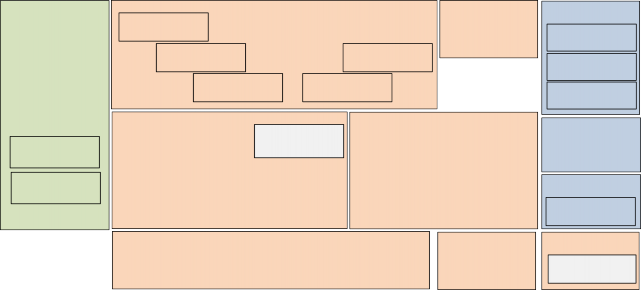
These process groups are organized into 3 process categories: Primary life cycle processes, Organizational life cycle processes and Supporting life cycle processes.
For each process a purpose statement is formulated that contains the unique functional objectives of the process when performed in a particular environment. For each purpose statement a list of specific outcomes is associated, as a list of expected positive results of the process performance.
Supporting Process Group (SUP)
System Engineering Process Group (SYS)
Validation Process Group (VAL)
Software Engineering Process Group (SWE)
Hardware Engineering Process Group (HWE)
Process Improvement Process Group (PIM)
Machine Learning Engineering Process Group (MLE)
Acquisition Process Supply Process Group Group (ACQ) (SPL)
REU.2
Management of Products for Reuse
Reuse Process Group (REU)
MAN.6
Measurement
MAN.5
Risk Management
MAN.3
Project Management
Management Process Group (MAN)
SUP.11
Machine Learning Data Management
SUP.10
Change Request Management
SYS.4
System Integration and Integration Verification
SYS.5
System Verification
SYS.3
System Architectural Design
SYS.2
System Requirements
Analysis
SYS.1
Requirements Elicitation
SPL.2
Product Release
ACQ.4
Supplier Monitoring
MLE.4
Machine Learning Model Testing
SWE.4
Software Unit Verification
SWE.3
Software Detailed Design and Unit Construction
HWE.2
HW Design
HWE.3
Verification against HW Design
SWE.5
Software Component Verification and Integration Verification
SWE.2
Software Architectural Design
PIM.3
Process Improvement
HWE.4
Verification against HW Requirements
HWE.1
HW Requirements Analysis
SWE.6
Software Verification
SWE.1
Software Requirements Analysis
SUP.9
Problem Resolution Management
SUP.8
Configuration Management
VAL.1
Validation
SUP.1
Quality Assurance
MLE.1 Machine Learning Requirements Analysis | MLE.2 Machine Learning Architecture | MLE.3 Machine Learning Training |
Primary Lifecycle Processes
Organizational Lifecycle Processes
Supporting Lifecycle Processes
Figure 2 — Automotive SPICE process reference model - Overview
The primary life cycle processes category consists of processes that may apply for an acquirer of products from a supplier or may apply for product development when responding to stakeholder needs and delivering products including the engineering processes needed for specification, design, implementation, integration and verification.
The primary life cycle processes category consists of the following groups:
the Acquisition process group;
the Supply process group;
the System engineering process group;
the Validation process group;
the Software engineering process group;
the Machine learning engineering process group and
the Hardware engineering process group.
The Acquisition process group (ACQ) consists of one process that is performed by the customer, or by the supplier when acting as a customer for its own suppliers, in order to acquire a product and/or service.
ACQ.4 | Supplier Monitoring |
Table 3 — Primary life cycle processes – ACQ process group
The Supply process group (SPL) consists of one process performed by the supplier in order to supply a product and/or a service.
SPL.2 | Product Release |
Table 4 — Primary life cycle processes – SPL process group
The System Engineering process group (SYS) consists of processes addressing the elicitation and management of customer and internal requirements, the definition of the system architecture and the integration and verification on the system level.
SYS.1 | Requirements Elicitation |
SYS.2 | System Requirements Analysis |
SYS.3 | System Architectural Design |
SYS.4 | System Integration and Integration Verification |
SYS.5 | System Verification |
Table 5 — Primary life cycle processes – SYS process group
The Validation process group (VAL) consists of one process that is performed to provide evidence that the product to be delivered satisfies the expectations for its intended use.
VAL.1 | Validation |
Table 6 — Primary life cycle processes – VAL process group
The Software Engineering process group (SWE) consists of processes addressing the management of software requirements derived from the system requirements, the development of the corresponding software architecture and design as well as the implementation, integration and verification of the software.
SWE.1 | Software Requirements Analysis |
SWE.2 | Software Architectural Design |
SWE.3 | Software Detailed Design and Unit Construction |
SWE.4 | Software Unit Verification |
SWE.5 | Software Component Verification and Integration Verification |
SWE.6 | Software Verification |
Table 7 — Primary life cycle processes – SWE process group
The Machine Learning Engineering process group (MLE) consists of processes addressing the management of ML requirements derived from the software requirements, the development of the corresponding ML architecture, the training of ML model, and testing of ML model against ML requirements.
MLE.1 | Machine Learning Requirements Analysis |
MLE.2 | Machine Learning Architecture |
MLE.3 | Machine Learning Training |
MLE.4 | Machine Learning Model Testing |
Table 8 — Primary life cycle processes – MLE process group
The Hardware Engineering process group (HWE) consists of processes addressing the management of hardware requirements derived from the system requirements, the development of the corresponding hardware architecture and design as well as the verification of the hardware.
HWE.1 | Hardware Requirements Analysis |
HWE.2 | Hardware Design |
HWE.3 | Verification against Hardware Design |
HWE.4 | Verification against Hardware Requirements |
Table 9 — Primary life cycle processes – HWE process group
The supporting life cycle processes category consists of processes that may be employed by any of the other processes at various points in the life cycle.
SUP.1 | Quality Assurance |
SUP.8 | Configuration Management |
SUP.9 | Problem Resolution Management |
SUP.10 | Change Request Management |
SUP.11 | Machine Learning Data Management |
Table 10 — Supporting life cycle processes - SUP process group
The organizational life cycle processes category consists of processes that develop process, product, and resource assets which, when used by projects in the organization, may help the organization achieve its business goals.
The organizational life cycle processes category consists of the following groups:
the Management process group;
the Process Improvement process group;
the Reuse process group.
The Management process group (MAN) consists of processes that may be used by anyone who manages any type of project or process within the life cycle.
MAN.3 | Project Management |
MAN.5 | Risk Management |
MAN.6 | Measurement |
Table 11 — Organizational life cycle processes - MAN process group
The Process Improvement process group (PIM) covers one process that contains practices to improve the processes performed in the organizational unit.
PIM.3 | Process Improvement |
Table 12 — Organizational life cycle processes - PIM process group
The Reuse process group (REU) covers one process to systematically exploit reuse opportunities in organization’s product portfolio.
REU.2 | Management of Products for Reuse |
Table 13 — Organizational life cycle processes - REU process group